SCAC Code 2026 Updates: What’s Changing + How to Prepare
SCAC Code 2026: What’s New, What Changed, and What You Should Do Next
If you’re searching for SCAC code 2026, you’re probably trying to answer one practical question: “Do I need to change anything to keep my SCAC valid in 2026?” The headline update is not about changing the format of your code—it’s about how SCAC applications and renewals are processed, especially for non-Class 8 carriers.
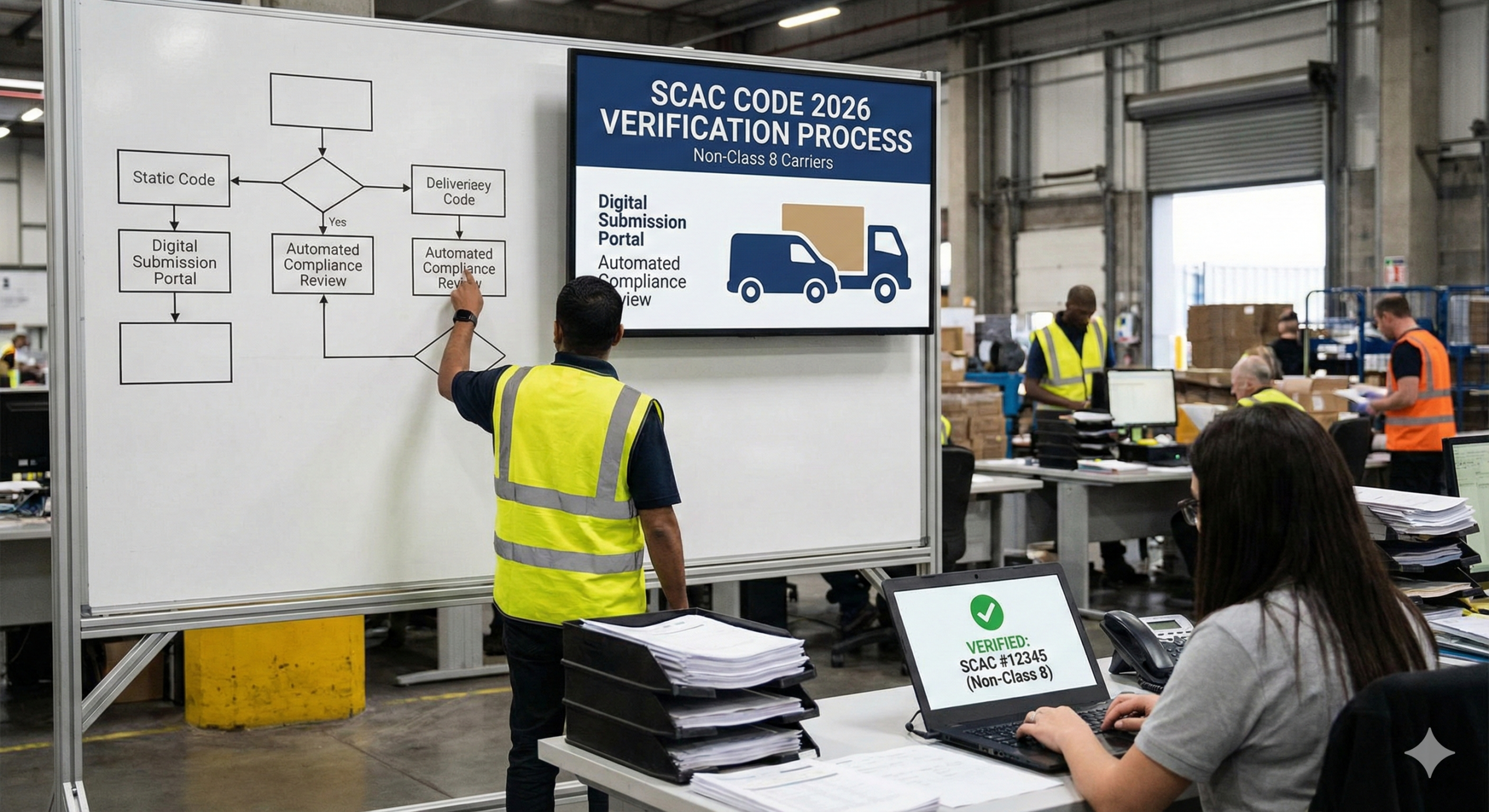
Starting February 26, 2026, NMFTA will implement a verification process for SCAC applications and renewals for non-Class 8 carriers, and NMFTA will become the sole issuer of SCACs for that group.
This article explains what the SCAC code 2026 update means, who it affects, and exactly how to prepare—without the fluff.
Key takeaways (read this first)
- Effective date: February 26,2026,
- What changes: Verification added + direct issuance by NMFTA for non-Class 8 SCAC applications/renewals
- Where to apply/renew: NMFTA’s official SCAC site: scaccode.com
- Why: Reduce fraud, stop look-alike reseller confusion, and protect the integrity of the identifier
- Class 8 resellers: NMFTA states no changes at this time (for Class 8 reseller relationships)
What is a SCAC code, in plain English?
A Standard Carrier Alpha Code (SCAC) is a 2–4 letter code used to identify transportation companies across shipping and logistics systems (billing, EDI, documentation, compliance workflows, and platform integrations). NMFTA is the organization that assigns SCACs for most companies.
Think of SCAC as a widely used “company identifier” for carriers—small, standardized, and easy to pass through systems that move freight.
What’s new in the SCAC code 2026 update?
1) A verification process for non-Class 8 carriers (starting Feb 26, 2026)
Beginning February 26, 2026, NMFTA will require a verification process for SCAC applications and renewals for non-Class 8 carriers.
Industry reporting around the change indicates verification may include items like license and address verification for affected applicants.
What this means in practice:
- Approvals may rely more heavily on accurate, consistent business details.
- “Close enough” contact info becomes a real problem (missed emails = delayed renewals).
- The process is designed to make impersonation and fraud harder.
2) NMFTA becomes the sole issuer for non-Class 8
On the same date, NMFTA will become the sole issuer of SCACs for non-Class 8 carriers—and those applications/renewals must be submitted directly through NMFTA’s official SCAC application site.
3) NMFTA ends reseller services for non-Class 8
- Stopping fraud and increasing security
- Eliminating confusion caused by unauthorized look-alike reseller websites
- Protecting carriers, brokers, and shippers from overpayment and data misuse
Who is affected by SCAC code 2026?
- A non-Class 8 carrier applying for a new SCAC or renewing in 2026,
- A broker / shipper / 3PL that onboards carriers and relies on SCAC for identification and workflow automation (you may need to update onboarding checklists and lead times)
- A platform operator building compliance checks into a TMS/ERP/EDI integration (verification may reduce fraud but introduces process dependencies)
NMFTA also published an informational event about the upcoming verification process (helpful if you want official guidance and expectations).
What to do now: a practical preparation checklist
Below is a “no surprises” checklist to prepare for SCAC code 2026 verification and direct issuance.
Step 1: Clean up your carrier identity data
Make sure the following are accurate and consistent everywhere you use them (website, invoices, FMCSA profile, onboarding docs, contracts, etc.):
- Legal business name
- Physical business address (not a stale or mismatched address)
- Primary contact name + email + phone
- Any business registration details you commonly supply during renewals
Verification processes punish inconsistency more than they punish small businesses.
Step 2: Plan renewals earlier than usual
If your SCAC renewal happens near the changeover, don’t treat it like a last-minute task. The moment verification is involved, “same-day renewal” becomes less predictable.
Step 3: Use the official NMFTA SCAC site for applications/renewals
NMFTA states that after Feb 26, 2026, non-Class 8 SCAC applications and renewals must be submitted directly via NMFTA’s official SCAC application site.
Step 4: Train your team to spot look-alike reseller sites
NMFTA is making this change partly because of confusion and fraud created by unauthorized reseller websites.
Practical controls:
- Maintain a short “official links” doc in your ops wiki.
- Require approvals for any third-party renewal invoices.
- If the page feels like it’s rushing you to pay “right now,” treat it as suspicious
Does SCAC code 2026 change pricing or the SCAC itself?
The core update is about process and issuance (verification + direct issuance) rather than changing your 2–4 letter SCAC format.
For pricing specifics, NMFTA’s FAQ hub is the safest reference point because it’s updated as policies evolve.
Frequently asked questions (FAQ)
When does the SCAC code 2026 change take effect?
Who must go through verification?
NMFTA states verification applies to SCAC applications and renewals for non-Class 8 carriers starting Feb 26, 2026.
Where do I apply or renew after the change?
Why is NMFTA doing this?
NMFTA explains it as a security move to prevent fraud, eliminate confusion from unauthorized reseller sites, protect against overpayment/data misuse, and strengthen trust in SCAC as an industry identifier.
Suggested internal links (for SEO + better RPM)
Most people lookup
- SCAC Lookup
- How to Renew a SCAC (step-by-step guide)
- SCAC vs USDOT vs MC Number (comparison guide)
- Carrier Onboarding Checklist (for brokers/3PL audiences)
- SCAC FAQ Hub (your own expanded FAQ)
- “SCAC lookup tool”
- “Renew your SCAC.”
- “SCAC vs DOT number”
- “carrier onboarding checklist”
— Resources —
NMFTA SCAC reseller update (official summary of the Feb 26, 2026 change):
https://info.nmfta.org/scac-reseller-updateNMFTA Help Center FAQ (verification changes for non-Class 8):
https://help.nmfta.org/hc/en-us/articles/43981296634011-SCAC-FAQs-Preparation-for-Verification-Changes-for-Non-Class-8-CarriersNMFTA official SCAC application portal:
https://scaccode.com/U.S. CBP explainer on SCAC (government reference):
https://www.help.cbp.gov/s/article/Article-1420